Pulled Pork — Low, Slow, and the Bone Test
How a tough, fatty hunk of pork shoulder becomes the most forgiving cook on the BBQ — and the single test that tells you it's done.
Pulled pork is the most forgiving thing you can cook outside. It wants to be overcooked. It punishes you for impatience and rewards you for forgetting about it. If brisket is the cut that humiliates you, pork shoulder is the one that bails you out.
The technique is essentially the same as brisket — low heat, long time, internal temperature drives the call. But the targets are different, the wood pairings are different, and the doneness test is, weirdly, a bone.
What’s actually happening in there
Pork shoulder (call it Boston butt, picnic shoulder, or just “shoulder” — they’re all the same neighbourhood) is mostly connective tissue and intramuscular fat marbled through dense muscle. To turn that into something you can shred with two forks:
- Collagen has to convert to gelatin. Same chemistry as brisket — the connective tissue needs hours in the 70–95°C range to break down. The difference: pork shoulder has more of it, which is why pulled pork is hard to overcook. You’re not pulling at a precise temperature; you’re pulling when the structure has actually fallen apart.
- The fat cap has to render down through the meat. Cook it fat-cap up so it self-bastes as it melts. Trim it back to about 5–8mm — too thick and it never renders out, too thin and the meat dries on top.
This is why the standard 1–1.5 hour-per-pound math works here too, but with way more slack: a brisket pulled at 85°C is a sad day; a shoulder pulled at 85°C is just a slower one.
The numbers that matter
- 107°C (225°F) — your pit. Same as brisket.
- 74°C (165°F) — the stall hits. Same evaporative cooling phenomenon. Wrap or wait.
- 88°C (190°F) — minimum for pulling, but you’re cutting it close. The meat will pull, but it’ll be stringy rather than silky.
- 93–95°C (200–203°F) — the sweet spot. The fat is fully rendered, collagen is gelatin, fibres slide apart.
A 4–5kg (9–11lb) shoulder takes 12–14 hours. Yes, really. Yes, you start at 6am.
The bone test
This is the test that beats every thermometer:
Grip the blade bone and give it a gentle twist. If it slides cleanly out of the meat with no resistance, you’re done. If it fights you, it needs another hour.
The bone in a properly cooked shoulder pulls out like a wooden handle from a pile of sand. If you’ve got a bone-in cut, this beats temperature every time.
Wood pairings actually matter
Pork is sweet. Wood is part of the seasoning, not just heat.
- Apple — light, fruity, can’t go wrong. The default for a reason.
- Cherry — slightly more colour and a deeper sweetness. Good for showing off.
- Hickory — assertive, smokier, more “traditional Southern.” Use in moderation or you’ll bury the pork.
- Mesquite — too aggressive for this length of cook. Save it for steaks.
- Oak — neutral, steady, lets the rub do the talking.
I rotate apple and cherry depending on what I’ve got. A blend of the two is hard to beat.
The rub and the rest
Pork shoulder is forgiving on the rub side too. A 50/50 blend of brown sugar and salt with paprika, black pepper, garlic and onion powder, and a hit of cayenne is the workhorse. Sugar caramelises in the bark. Salt does what salt does. Don’t overthink it.
Rest matters: pulled at 95°C, wrap, drop in a warm cooler for at least an hour, ideally two. Then shred. The juices that come out into the foil/paper go back into the meat as you pull it.
Where this shows up
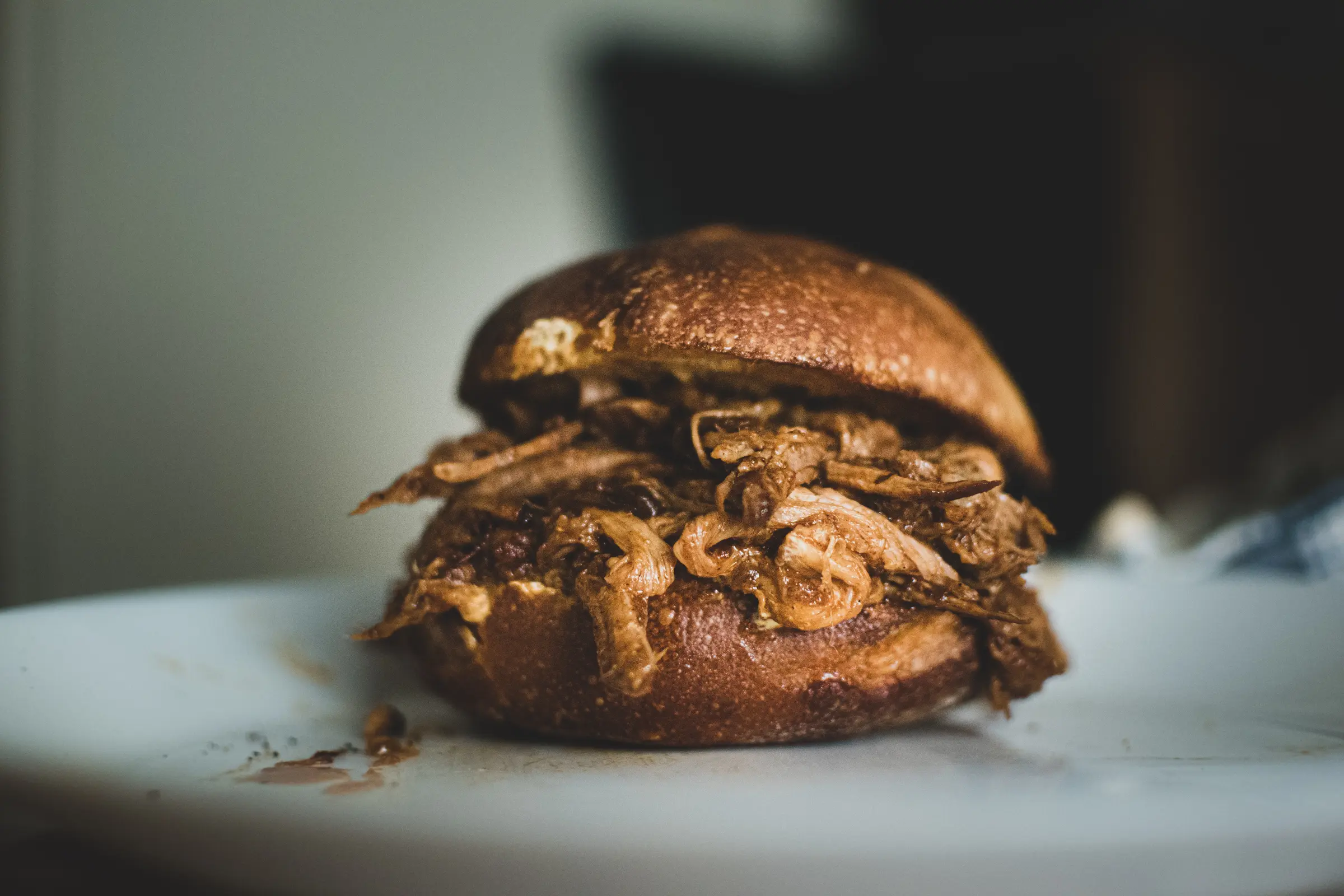
This is the technique behind every pork-shoulder dish I make. Pulled into a soft bun with a vinegar slaw is the classic, but the same shoulder feeds three or four different meals through the week:
- Pulled pork rolls with a tangy slaw and pickled red onion (the canonical version — recipe coming).
- Pork shoulder tacos with a quick pineapple salsa, lime, and a sharper sauce.
- A breakfast hash the morning after — diced potatoes, the leftover bark crispy in a pan, a fried egg.
Cook the shoulder once, eat from it for days. That’s the deal.
What I learned the hard way
- Pulling too early is the only real mistake. If it’s not falling apart, give it another hour. Trust the bone test.
- Don’t skip the rest. A shoulder pulled straight off the smoker is mushy and dry at the same time, somehow. An hour in a warm cooler fixes both.
- Shred while warm. Cooled pulled pork pulls like rubber. If it’s gone cold, gently rewarm before shredding.
- Save the juice. The fat-and-gelatin pool in the wrap is liquid gold. Strain it, skim if you want, and pour a few spoonfuls back into the shredded meat.
- More than you think. A 4kg shoulder feeds fewer people than you’d guess once it’s pulled. Plan for ~150g cooked weight per adult.
Light the fire. Pour a coffee. Come back twelve hours later. That’s the only recipe you need.
Now go try it.